DE
 EN
 FR
 HU
 RO
 ES


Die aktuellen Shopbewertungen werden direkt aus der offiziellen Bewertungsquelle geladen.
SALES -12%

1
17
Passendes Zubehör
Optional zusätzlich zu deinem Produkt.

+ €37,90
Nicht verfügbar

+ €24,90
Nicht verfügbar

+ €18,90
Nicht verfügbar
The essentials at a glance
- 2.688 Wh Speicherkapazität– bis 16.128 Wh erweiterbar
- 800 W Netz AC-Ausgang– bis 1.200 W am Inselanschluss
- Smart Meter inkl. Setumfang– 3-phasige Verbrauchsmessung
- 4 MPPT · bis 3.600 W PV-Eingang– 3.600 W mit Erweiterungsakku
Included with the selected variant
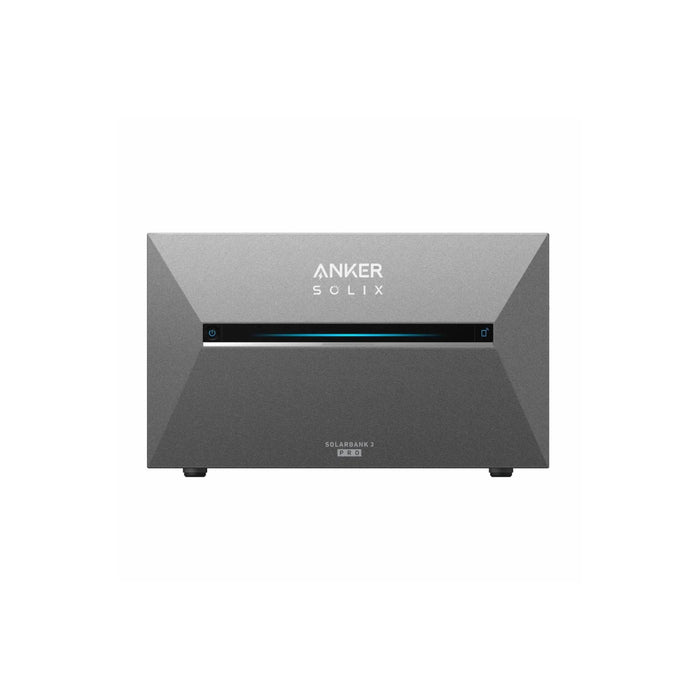
- 1× Anker SOLIX Solarbank 3 E2700 Pro (SKU 10003)
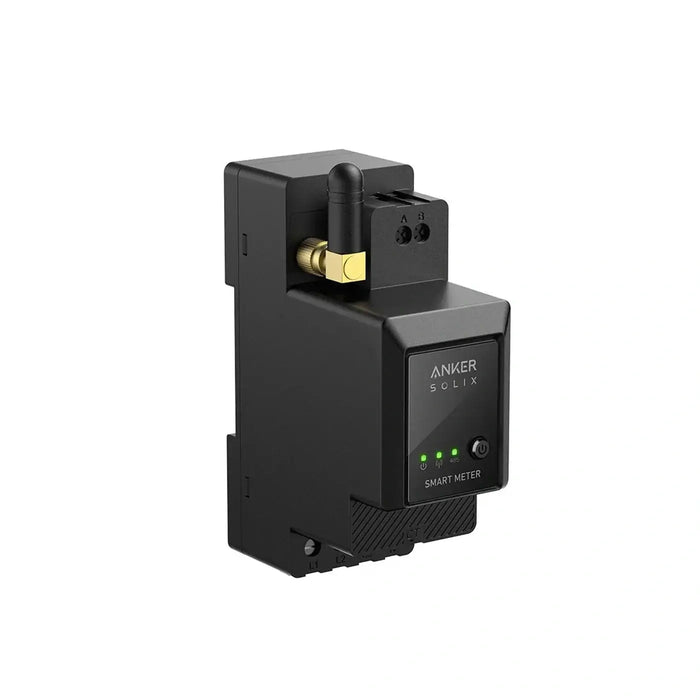
- 1× Anker SOLIX Smart Meter (SKU 10101)
Anker SOLIX Solarbank 3 E2700 Pro – 2.68 kWh battery with smart meter
Technical details & expansion
- 2.688 Wh · Speicherkapazitätbis 16.128 Wh erweiterbar
- 800 W Netz · AC-Ausgangbis 1.200 W am Inselanschluss
- Smart Meter inkl. · Setumfang3-phasige Verbrauchsmessung
- 4 MPPT · bis 3.600 W · PV-Eingang3.600 W mit Erweiterungsakku
Pay securely and easily
Up to 30 years warranty
Enjoy maximum peace of mind: up to 30 years warranty on high-performance modules, 10–12 years product warranty on inverters and 10 years on battery storage systems (with a 15-year service life). For other products, please refer to the specific product documentation.
30-day returns
Orders from Mini Power can be returned within 30 days of receipt when the return conditions are met. Statutory cancellation rights remain unaffected.
View cancellation policy24/7 customer support
You can contact us 24 hours a day, 7 days a week. We respond as quickly as possible during the applicable service hours; an immediate round-the-clock response is not promised.
Contact servicePickup in Weilheim
Pickup discount: 4% on all other orders. For battery storage units weighing at least 40 kg or battery-and-solar-panel sets: 3% plus EUR 70 per battery or set. Each unit or set is counted once.
Pickup address: Mini Power warehouse (New Power GmbH)
Paradeisstr. 83, 82362 Weilheim in Oberbayern, Germany.
Solar panels and mounting structures can only be collected in Weilheim.
Pickup hours (Mon–Fri):
09:00–15:00 without an appointment.
15:00–18:00 by prior appointment only.
Contact & appointments: info@miniminipower.com
Dynamic delivery estimateDelivery
Standard ( 2-3 Werktage )
This estimate is based on the maintained delivery mode. The checkout display remains authoritative.Estimate · confirmed at checkoutReale Kundenbewertungen von Mini Power
Mini Power / New Power GmbH ist seit 2025 als Anker SOLIX Authorized Retailer zertifiziert. Der Nachweis ist in der offiziellen Anker SOLIX Händlerübersicht einsehbar.

Savings potential with a complete set
Product values follow your selection; check example and household values.
Indicative estimate.
Your selection
Default Title
Custom power or capacity: adjust investment. Reset restores product values.
Grid output only: no charging or off-grid output rating.
More assumptionsMore assumptions
Results update automatically
Loading estimate.
Complete all fields and check allowed ranges.
Additional savings from storage
estimated in year 1
per month on average
Additional savings only: the same PV system with and without new storage, less lost export payments.
Indicative estimate.
All results
- PV generation
- kWh / year
- Additional self-consumption
- kWh / year
- Payback
- years
- Total investment
Self-consumption rate · whole system:
Average savings / year · 20 years
per month on averageSavings over 20 years
Less investmentPrice change / yield reduction: / .
How this estimate is calculated
PV generation before storage losses and AC limits. Model yield for northern, central and southern Germany is 920 / 1,020 / 1,150 kWh per kWp per year, adjusted for orientation, tilt and shade. Seasonal weights, daylight and synthetic weather distribute generation across 8,760 hours, with peaks capped at module power. Each hour is split equally into four quarter-hours for energy dispatch. No measured weather data is used.
A reference household profile derived from meter data represents consumption in 35,040 quarter-hours and retains the load peaks present in those intervals. Day and night values are scaled separately to your annual consumption and chosen daytime share (08:00–18:00). Solar supplies current demand first, followed by stored energy. AC and charging power limit energy delivered in each 15-minute interval. Only energy delivered to the household counts as self-consumption. All comparisons use identical weather and consumption profiles.
Reference load profile source, primary data by CoSSMic / ISC Konstanz: Open Power System Data (2020), Household Data, 2020-04-15 · CC BY 4.0. Adaptation: household residential5, year 2017; cumulative meter readings converted to 15-minute consumption and scaled to annual demand and daytime share. Fixed Central European Time (UTC+1). This is a reference household, not a measurement of your consumption.
Assumptions: 90% of nominal capacity is usable; charging and discharging together have 90% round-trip efficiency. Storage starts empty. Remaining energy carries across days and years but counts as savings only when used. With DC coupling, PV surplus can charge before the AC limit; with AC coupling, PV is first limited to the AC rating entered. Direct use, battery discharge and export share that AC limit. No grid charging or battery export.
Add storage: compares the same solar system without and with the planned storage. Only additional self-use at the electricity price for that year counts, minus any lost export payment. Electricity already used directly is not counted again as a storage saving. Payback includes the additional storage investment and extra costs.
For every comparison, yield and use are recalculated in each of the 20 years. Annual PV yield falls linearly with the module ageing assumption, while electricity prices change annually on a compound basis. The export payment stays constant. Total savings add up all annual values, including negative values; average annual savings are this total divided by 20. The net value deducts the investment including extra costs. Payback is reached when cumulative savings cover this investment. The point within a year is interpolated linearly.
The single AC input is a shared model limit; separate PV and battery inverters need a more detailed calculation. Unless charging power is provided separately, available PV and free storage capacity limit charging. The scaled reference household and synthetic PV weather do not replace measurements of your installation. Peaks shorter than 15 minutes, battery ageing, standby use, control behaviour, installation losses and specific heat-pump or electric-car loads are not fully represented. Replacements, maintenance, financing and discounting are excluded. Higher AC power or greater storage increase savings only when surplus and later consumption can use them. Savings are not guaranteed.
Model estimate, no yield guarantee. Monthly figure = annual average; seasonal variation applies.
Product description
Das Anker SOLIX Solarbank 3 E2700 Pro Set mit Smart Meter kombiniert 2.688 Wh LiFePO4-Speicher, vier MPPT und Verbrauchsmessung für eine bedarfsgerechte Einspeisung. Bis zu 3.600 W PV-Eingang sind mit passender Speichererweiterung möglich; ohne Erweiterungsakku beträgt die Nennleistung 1.800 W. Der enthaltene Smart Meter unterstützt die automatische Anpassung an den Haushaltsverbrauch.
Mini Power / New Power GmbH ist seit 2025 als Anker SOLIX Authorized Retailer zertifiziert. Der Nachweis ist in der offiziellen Anker SOLIX Händlerübersicht einsehbar.
Lieferumfang
1× Anker SOLIX Solarbank 3 E2700 Pro
1× Anker SOLIX Smart Meter, 3-phasig
3× Stromwandler, 120 A
1× Verlängerungsantenne
1× Bedienungs-, Sicherheits- und Installationsunterlagen
Produktvorteile
-- 2.688 Wh Grundkapazität: Speichert Solarstrom für Abend, Nacht und Verbrauchsspitzen.
-- Smart Meter im Set: Misst den Haushaltsverbrauch dreiphasig und unterstützt eine bedarfsgerechte Einspeisung.
-- Vier unabhängige MPPT: Erleichtern die Belegung unterschiedlicher Modulgruppen und Ausrichtungen.
-- Bis zu 3.600 W PV-Eingang: Mit passender Speichererweiterung; das Basisgerät allein arbeitet mit 1.800 W Nennleistung.
-- Erweiterbar bis 16.128 Wh: Unterstützt den schrittweisen Ausbau mit bis zu fünf kompatiblen Akkumodulen.
Kompatibilität
Geeignet für PV-Module innerhalb des zulässigen MPPT-Spannungsbereichs von 16 bis 60 V DC. Vier MPPT ermöglichen den Anschluss von bis zu acht Modulen in einer passenden Auslegung. Die Grundkapazität von 2.688 Wh lässt sich mit bis zu fünf kompatiblen Erweiterungsakkus auf 16.128 Wh ausbauen. Der enthaltene Anker SOLIX Smart Meter ist für eine einzelne Solarbank der Serien 2 oder 3 ausgelegt; Installation des Zählers durch eine Elektrofachkraft.
Technische Daten
-- Nennenergie: 2.688 Wh
-- Erweiterbare Gesamtkapazität: bis 16.128 Wh
-- PV-Tracking: 4 MPPT
-- Maximaler PV-Eingang: bis 3.600 W mit passendem Erweiterungsakku
-- Nennleistung des Einzelgeräts ohne Erweiterungsakku: 1.800 W
-- Netzgekoppelter AC-Ausgang: bis 800 W
-- Inselanschluss: bis 1.200 W
-- Schutzart: IP65
-- Akkutechnologie: LiFePO4
-- Herstellerangabe: bis 6.000 Ladezyklen, danach mindestens 70 % Restkapazität
Smart Meter und Energiemanagement
Der enthaltene dreiphasige Anker SOLIX Smart Meter misst Bezug und Einspeisung mit drei 120-A-Stromwandlern. Die Solarbank kann Änderungen des Haushaltsverbrauchs innerhalb von weniger als drei Sekunden berücksichtigen und ihre Abgabe bedarfsgerecht anpassen. WLAN und Bluetooth dienen der Einrichtung und Kommunikation mit der Anker App. Der Smart Meter wird im Verteilerkasten von einer qualifizierten Elektrofachkraft installiert.
Passendes Zubehör und verwandte Produkte
-- Anker SOLIX Anschlusskabel 15m: längeres Schuko-Anschlusskabel für weiter entfernte Aufstellorte.
-- Anker SOLIX Solarbank 2 E1600 Pro Speicher 1600 Wh Komplettset: kompaktere Alternative innerhalb der Solarbank-Serie.
Warum Mini Power
Mini Power trennt bei der Solarbank 3 E2700 Pro Grundgerät, Erweiterungsleistung und Setbestandteile sauber voneinander. Dadurch erkennen Sie, dass der Smart Meter enthalten ist, 3.600 W PV-Eingang eine passende Speichererweiterung voraussetzen und ohne Zusatzakku 1.800 W Nennleistung gelten. Ebenso werden Netz- und Inselanschluss getrennt ausgewiesen. Das erleichtert eine realistische Anlagenplanung und verhindert Fehlkäufe bei Modulen, Kabeln und Erweiterungsakkus und Anschlusswegen.
Häufige Fragen
-- Ist der Smart Meter im Set enthalten?
Ja. Enthalten sind der dreiphasige Anker SOLIX Smart Meter, drei 120-A-Stromwandler und eine Verlängerungsantenne.
-- Wann sind 3.600 W PV-Eingang möglich?
Der maximale Wert setzt eine passende Speichererweiterung voraus. Das Basisgerät allein besitzt 1.800 W Nennleistung.
-- Wie weit lässt sich die Kapazität erweitern?
Mit bis zu fünf kompatiblen Erweiterungsakkus sind insgesamt bis zu 16.128 Wh möglich.
Product story


Variants
Data sheet & instructions
Verified product-specific documents and instructions.
01
Anker SOLIX Solarbank 3 E2700 Pro Speicher 2,68 kWh – Bedienungsanleitung (DE · V1.20250422 · 2025-04-22)
02
Anker SOLIX Smart Meter – Installations- und Bedienungsanleitung
03
Anker SOLIX Solarbank 3 E2700 Pro – Datenblatt
04
Anker SOLIX Smart Meter – Sicherheitshinweise
05
Anker SOLIX Solarbank 3 E2700 Pro – Kurzanleitung (Deutsch/Englisch)
06
Anker SOLIX Solarbank 3 E2700 Pro Speicher 2,68 kWh – Sicherheitshinweise
07
Anker SOLIX Solarbank 3 E2700 Pro – TOR/OVE-Einheitenzertifikat (Österreich)
Technische Daten
Warum Mini Power
Mini Power unterstützt Sie bei der Auswahl von Balkonkraftwerken, Speichern, Solarmodulen und passendem Zubehör. Produktinformationen, Lieferumfang und Kompatibilität werden nachvollziehbar dargestellt, damit Sie ein System auswählen können, das zu Ihrem Standort und Energiebedarf passt. Bei Fragen erreichen Sie uns direkt unter info@miniminipower.com.
Starten Sie mit Mini Power in Ihre eigene Energiewende.


Kommen diese Anker Solarbank 3 E2700 Pro direkt von Anker?
Wie viel Speicherkapazität bietet der Anker Solarbank 3 E2700 Pro?
Wie hilft mir das Energiemanagementsystem vom Anker Solix Solarbank 3 E2700 Pro beim Stromsparen?
Wie viel Solarleistung kann Anker Solix Solarbank 3 E2700 Pro eingespeist werden?
Kann die Kapazität der Anker Solarbank 3 E2700 Pro erweitert werden?
Ist die Erweiterung vom Anker Solarbank 3 E2700 Pro kompliziert?
Wie viele Solarmodule können maximal an die Anker Solix Solarbank E2700 3 Pro angeschlossen werden?
Kann ich Anker Solix Solarbank 3 E2700 Pro auch bei extrem niedrigen Temperaturen sicher aufladen?
Was bedeutet die bidirektionale 1200W Ladeleistung der Anker Solarbank E2700 3 Pro?
Welche Vorteile bietet der Inselbetrieb mit 1200 W bei der Anker Solarbank E2700 3 Pro?
Im Fokus

PV-Stecker verschmort: Abstand halten und Prüfung veranlassen
Ein beschädigter PV-Stecker gehört nicht weiter in Betrieb. Welche Unterlagen dem Fachbetrieb helfen und warum ein Foto keine sichere Ursachenanalyse erlaubt.

Solarkabel-Fensterdurchführung kaufen: Welche Nachweise du vor der Bestellung brauchst
Flache Form und passende Stecker reichen nicht. Diese Checkliste hilft dir, Kabeldaten, Anschlusskombination und Einbauort vor dem Kauf einer PV-Fensterdurchführung gezielt zu klären.

Balkonkraftwerk auf der Dachterrasse: Geländer, Flachdach, Windlast und Verschattung prüfen
Was vor einem Balkonkraftwerk auf der Dachterrasse geklärt sein muss Ein Balkonkraftwerk auf der Dachterrasse braucht eine zum Gebäude und zum Modul passende Befestigung. Ein Geländer...

Solarbank 4 oder STREAM 5000 erweitern: Speicherbedarf und E-Auto-Ladezeiten planen
Wie viel zusätzliche Kapazität passt zu deinem Alltag? Ladefenster, Haushaltsbedarf und Wallbox-Freigabe getrennt prüfen.

Anker
+ VergleichenAnker SOLIX Solarbank 3 E2700 Pro – 2.68 kWh battery kit with Power Dock
Produktmaterial ansehen 22 Bilder →€1.389,00€1.179,00
Mwst. inklusive.
Available

Anker
+ VergleichenAnker SOLIX Solarbank 3 E2700 Pro Storage complete set 5.37 kWh
Produktmaterial ansehen 10 Bilder →€1.789,00€1.559,00
Mwst. inklusive.
Available

Anker
+ VergleichenAnker SOLIX BP2700 extension battery for Solarbank 2&3 (discount)
Produktmaterial ansehen 5 Bilder →€759,00€639,00
Mwst. inklusive.
Available

Mini Power
+ VergleichenAnker SOLIX Solarbank 3 E2700 Pro Balcony power plant storage with 500W solar module complete set
Produktmaterial ansehen 23 Bilder · 3 Konfigurationsgruppen →€1.269,00ab€1.119,00
Mwst. inklusive.
Available